

Privee AI Review: Three Weeks Refereeing a Fictional Tavern
- Hands-on test, free tier
- Checked

Free plan available
from $4.17/mo
My Privee AI verdict: a good tavern behind a sloppy front door
Privee AI is a small roleplay hub that writes better than its size suggests. Its group scenes were the best thing about it, and they are the part most likely to make someone laugh out loud at a screen. The trouble is everything around the writing.
Prices are hidden on the web, the credit system is never explained, the terms come from a template, and the Explore feed needs a much firmer hand. None of that ruins a conversation. All of it tells you how much care went into the parts that are not a conversation.
My advice is simple. If you like fandom characters, imported cards and ensemble scenes, the subscription is cheap enough to try for one month through the phone app. If you want a tidy, well-moderated catalogue, or you care where your chats end up, I'd look elsewhere and not feel bad about it.
Key takeaways
- Group chats are the reason to be here, and today they sit behind Privee+ rather than on the free tier.
- Replies are well written, mixing narration and dialogue, and short-term memory holds up.
- Prices only appear inside the iOS and Android apps; the web app shows none and sells nothing.
- The Explore feed recommends characters that conflict with the platform's own age rule, even with Safe Search on.
- Chats may be used to train models and ad networks are named in the privacy policy, so keep personal details out.
How I used Privee AI: three weeks and one fictional tavern
Three weeks on the free tier
My time with Privee AI was short and specific: three weeks in February 2025, on the free tier from start to finish. Most evenings went into one running tavern scene with a small cast I kept returning to. I never bought anything, which in this category is either discipline or cheapness, depending on who is telling it.
Privee AI at a glance
- Price from
- $4.17/mo
- Free tier
- Free plan available
- NSFW content
- Allowed
- Platforms
- Web, iOS, Android
- How it was tested
- Hands-on test, free tier,
- On your card statement
- Not known yet - I have not paid for it
The routine was simple. Work during the day, the tavern at night, and a quiet count of how many messages were left before the scene had to stop. That count is the part of the story I remember least fondly.
After three weeks I stopped, and the reason was the meter rather than the product. The free daily limit meant rationing, and I didn't want to pay for a subscription just to referee a fictional tavern. I already referee a real one on Thursdays, and one table per week is plenty of refereeing for any man.
| What | Details |
|---|---|
| Period | Feb 2025 |
| How long | 3 weeks |
| Plans I paid for | Free tier (free, whole period) |
| How it ended | stopped after three weeks; did not want to pay for a subscription |
| Facts re-checked | 23 September 2026 |
From the author's own notes; prices and features re-checked on 23 September 2026.
That is a strange reason to leave an app, and I know it. Most apps lose me because the writing goes flat or the billing gets sneaky. Privee lost me because it was good enough to feel like a second job, and the second job paid in messages I had to count.
It is also a slightly unfair reason, and I'll own that. The subscription was not the problem; my unwillingness to buy one was. Paying to run a pretend inn when I already run a real one felt like buying a second gym membership to use on the days I skip the first.
I do miss Captain Three-Hands. He came out of a picture with one hand too many, and he got a nickname that outlived my interest in the app. Some characters earn their place in your life through good writing; he earned his through a continuity error.
What Privee AI is, on paper
Privee AI launched in 2024 and describes itself as a character hub for roleplay. The interface is in English only. That is the whole pitch, and to its credit the product does not pretend to be a therapist, a coach or a life partner.
The marketing site lives at www.priveeai.com, and the web app itself runs at app.priveeai.com. As of 23 September 2026 the site is live. There are also iOS and Android apps, listed in both stores as "Privee AI - Chat, Talk, Play".
The current facts in this review were checked hands-on on 23 September 2026, in the web version, on the free tier. So when a section says "today", it means that free web account on that date. My own story is from February 2025, and where the two disagree, both appear side by side.
That gap matters here more than usual. Several things that were free in my time now carry a price tag, and a review that only told the old story would send you to a tavern that has since put in a cover charge.
I'd rather show both than pretend the app froze in time. Apps like this change their pricing more often than a client changes a colour grade, and the old story is only useful if you know which parts still hold.
The store listings and the numbers
The iOS app was released on 2024-08-02. On the App Store it is rated 4.09 from 68 ratings, according to the App Store lookup. That is a thin sample, the review equivalent of a restaurant with a handful of tables and a proud owner.
The Android app does better on volume. It is rated 4.2 from 464 reviews and shows 50K+ downloads. The Android app was last updated on Sep 2, 2026, so someone is still shipping code.
Between the two stores, the picture is of a modest app with a loyal core rather than a hit. That fits the rest of this review: good at one thing, rough around the edges.
The App Store listing sits at id 6593681775, and the Google Play listing is under com.priveeai.app. Checking the package name before installing is a habit worth having with any small app. It is the same instinct as checking a used car's VIN before you fall for the paint.
Where the company shows its face
The footer links a Discord server through priveeai.com/discord. It also links a subreddit, r/PriveeAIApp, through priveeai.com/reddit. No X, Instagram, TikTok or YouTube links were found.
There is a blog at priveeai.com/blog. The site also shows a "Verified by BrandPush.co" press badge. I give badges like that no weight either way; they are the website version of an "As seen on TV" sticker.
A Discord and a subreddit tell me more than the badge does. They are where users complain in public, and a company that links to its own complaint box is at least not hiding from it. For a small operator, that counts for something.
My Privee AI test log
Chris FurreyFounder and writer Hands-on test, free tier
-
Before signing up I ran the domain through two scam-checker sites and used my burner email. It came out okay, but I stayed careful.
-
I put a pirate captain, a stern librarian and a nervous intern in one tavern scene. The librarian shushed the pirate; the intern apologized to both.
-
After 15 messages the pirate proposed to the librarian. She turned him down with a Dewey Decimal pun, and Moose came over to check on me.
-
The pirate came out with three hands in one picture. My D&D group has called him Captain Three-Hands ever since.
-
The librarian remembered the pirate's overdue book two days later and brought it up unprompted.
-
After three weeks I stopped: the free daily limit meant rationing, and I didn't want to pay to referee a fictional tavern.
Nothing paid yet
Signing up for Privee AI: three minutes to the first match
The first night, with the doors locked
The first thing that struck me was the store name: "Privee AI - Chat, Talk, Play". It sounds like a toy store, the kind with a plush dragon in the window. The website went the other way and leaned hard on privacy and "lifelike" characters, which is a strange pairing with a name that says Play.
Privacy as a headline always makes me slightly more suspicious, not less. It is like a used-car lot with "honest" in its name. The word is doing a lot of work, and I wanted to see what was behind it before handing over anything real.
Before I signed up I ran the domain through two scam-checker sites, as I do with any site new to me. I also used my burner email, because a new app is a stranger until proven otherwise. The checks came out okay.
Okay is not the same as trustworthy, though. It was a small company without much of a track record, so I stayed careful. I treated it the way I treat a client who pays the deposit on time: good sign, still no raw footage until the second invoice clears.
That first night set the tone for the whole three weeks. The writing surprised me, the company never fully earned my trust, and both of those stayed true. Being careful cost me nothing, and I would do the same again.
How the sign-up works today
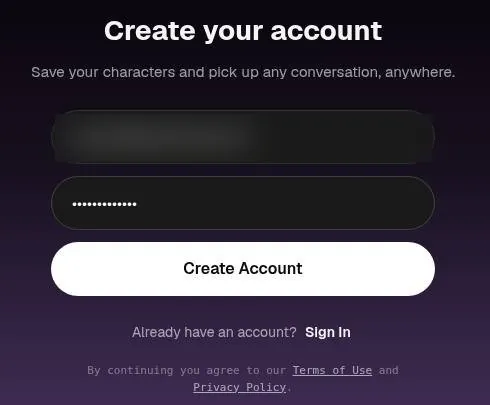
Sign-up offers two routes: Google, or e-mail plus a password. The sign-in screen adds a third option, Apple. For a first look I'd pick e-mail with a throwaway address; the Google and Apple buttons are faster, but they tie the app to an identity you actually use.
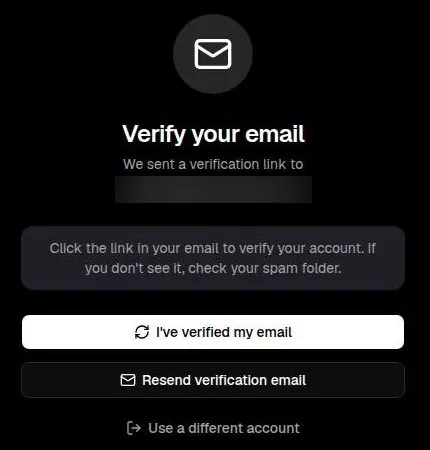
E-mail sign-up leads to a "Verify your email" screen. The verification message is a Firebase e-mail titled "Privee AI - Verify your Email", sent from a no-reply address. It arrives within about 1 minute, and the link works.
Then comes a small irritation. After verifying the e-mail, the user must sign in again manually. It is a small thing, but it is the kind of seam an editor notices, like a jump cut nobody bothered to smooth.
Eight steps of onboarding
Onboarding has about 8 steps. The first is a consent screen headed "Privee is for adults". A second checkbox on that screen confirms agreement to the Terms and the Privacy Policy.
Next comes a username. Onboarding suggests one automatically, for example "InfiniteAmethyst402", and the field arrives prefilled. I like that for privacy reasons: a random gemstone name gives away nothing about you, which is more than most people manage when they pick their own.
Onboarding asks for the birth year and for gender. The profile for the September 2026 check was set up with birth year 1990 and gender male. Then it asks "Who would you like to see?", with the options Everyone, Women and Men.
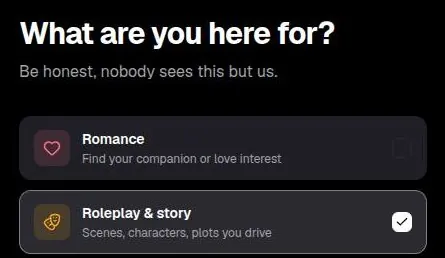
The next question is "What are you here for?". The options are Romance, Roleplay & story, a choice for unfiltered scenes and characters, and Just talk. I'd answer it honestly, since the answer seems to steer what the app shows first, and a wrong answer only means scrolling past things you did not want.
After that, onboarding asks for a visual style, Realistic or Illustration, and for interests. None of it takes long. The whole sign-up takes about 3 minutes.
Three minutes is quick for this many questions. The flow feels like a well-run intake form at a decent clinic: lots of boxes, none of them confusing, and nobody asking for a card before you have seen the waiting room.
Straight into a chat
Onboarding ends with a card headed "YOUR FIRST MATCH": a suggested character with a "Say hi" button and a "Show me someone else" button. The first-match flow opens a chat straight away with "Kenji", a community-made character described as "Your devoted personal assistant". There is no browsing step in between; the match drops the user straight into a conversation.
My feelings about that design are mixed. It is efficient, like a wedding DJ who starts the first dance before anyone can get nervous. It also means the first thing a new user sees is one character picked by an algorithm, not the catalogue, and the catalogue is where the real questions about this app live.
For someone who knows what they want, the flow is fine. For someone deciding whether to trust the place, I'd skip the first match, set up a persona, and look around before typing a word. The first match is a suggestion, not a commitment, and I'd treat it that way.
The character library and the creators behind it
The first impression of the catalogue is fandom. The landing page showcases a long run of copyrighted characters from Harry Potter, Game of Thrones, ACOTAR and Marvel. It reads less like a product page and more like a convention hall where nobody checked the licences.
I understand why. Fandom is what brings roleplay users in, and a familiar face gets a first message faster than an original one. I still think it is a risk for a company this size, because the day a rights holder notices, the showcase is the first thing to go.
For a reader, the practical risk is small but real. A favourite character built on someone else's franchise can vanish overnight, and whatever story you built with it goes too. I'd keep copies of anything you care about.
The other half of the library is social. Creators have public profiles, at an address made of /creator/ plus their username. Those profiles show followers and following counts, which adds a social creator layer on top of the characters.
I like that in principle. A creator profile lets you find the people who write good characters and follow them, the way you follow a colourist whose work you trust. It also means popularity can matter more than quality, and follower counts reward whatever gets clicks.
My advice for browsing is to treat creators like vendors at a flea market. Look at a few of their characters before trusting any single one, and give the ones with thoughtful descriptions more of your time than the ones with loud thumbnails.
Building characters and personas on Privee AI
Playing a glassblower
The feature I enjoyed most outside the group scenes was the persona. The persona settings let me play a traveling glassblower in a fantasy land. It was a small costume, but it changed how every character spoke to me.
The characters asked about my "furnace work", which pleased me more than it should have. In real life nobody asks about my work unless they want a discount on a video. A fictional innkeeper asking how the furnace was running felt like the nicest client call of the month.
Part of the pleasure was that I had picked a job nobody would confuse with mine. Glass is all heat and timing, editing is all patience and coffee, and pretending to be the first for an evening was a holiday from the second.
That is the point of personas, and Privee does support them: chats let you pick one. A persona is cheap to set up and it pays off in every scene. If you only try one creative feature here, make it this one.
Several ways to start a character
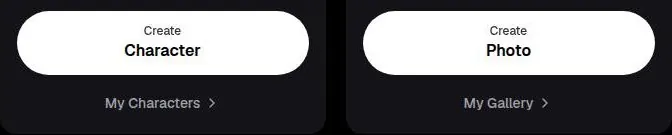
A character can be created "From scratch", or drafted by AI from a short prompt with "Describe to AI". Character cards can also be imported as .png, .json or .byaf files, the SillyTavern and Backyard style. That import is a quiet selling point; anyone arriving with a folder of cards from another app can move in without retyping.
The Play Store listing also describes "Magic AI Studio", which turns an image into a character. Studio itself has four modes: Character, Photo, Group and Story, the last one for interactive stories. Group and Story are where the paid tier starts to matter, which the pricing section covers.
I'd start with the AI draft and then rewrite it by hand. A machine draft is like an auto-generated edit from a phone: it gets the order right and the timing wrong, and the fixing is where the character becomes yours.
What the creator asks for
The character creator has four steps: Basics, Character, Image and Review. The Basics step holds most of the limits. A display name can run up to 100 characters, and an introduction up to 80.
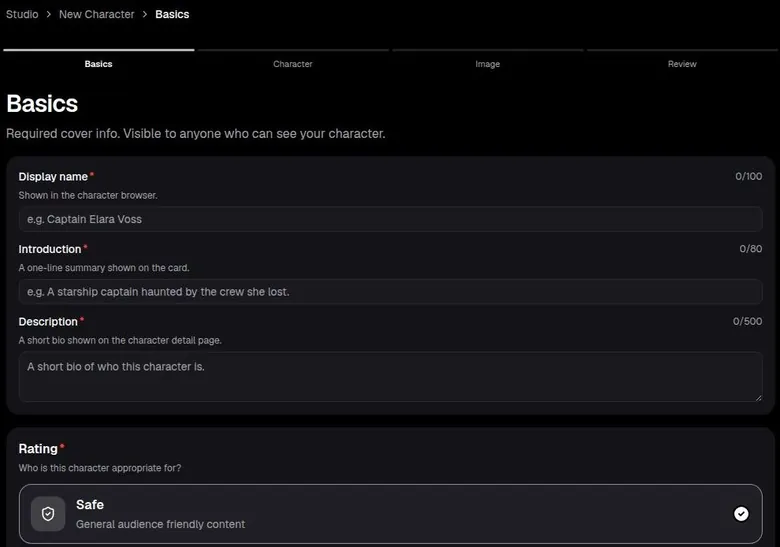
The description gets up to 500 characters. That is short. It is enough for a personality sketch, but not a backstory, so the craft is in choosing what to leave out, like cutting a trailer instead of the whole film.
Basics also asks for a gender and allows up to 6 tags. A rating is required, either Safe or Mature. I like that the rating is compulsory; it puts the label on the creator rather than leaving the reader to guess.
The FAQ says Character Studio characters "can be kept private or shared with the Privee AI community". I'd keep a new character private until it behaves the way you want. Publishing a half-finished character is like sending a client the rough cut; they will remember the rough cut.
What conversations on Privee AI felt like
The tavern cast
Group chat was the reason I stayed. I put a pirate captain, a stern librarian and a nervous intern in one tavern scene, mostly to see whether the app could keep three voices apart. It could, and better than I expected.
The librarian shushed the pirate, and the intern apologized to both of them. That one beat told me more than any feature list. Three characters had three distinct reactions to the same moment, which is exactly what a decent ensemble scene needs and what most apps smear into one voice.
I spent a lot of my free messages in that tavern. It felt like directing a sitcom with a cast that never missed a call time. The only one who ever ran late was me, because the daily allowance ran out before the scene did.
Casting was the fun part. A loud pirate, a stern librarian and a nervous intern is a classic trio: one pushes, one pushes back, one gets caught in between. When the app understood that shape without being told, I stopped thinking of it as software and started thinking of it as a writers' room.
The proposal
The best moment came in one group chat after 15 messages. The pirate proposed to the librarian. Nobody had warned me the tavern had a romance subplot, and I shoot enough weddings to know a rushed proposal when I see one.
She rejected him with a Dewey Decimal pun. I laughed so hard that Moose came over to check on me. He stood there with the look of a dog who has concluded his owner is fine but not well.
That is the moment I would put in a trailer for this app. It did not feel like clever prompting on anyone's part. It felt like the characters reacting to each other in a way that was written rather than generated, and I have not had many of those in any app.
The joke also stayed in character, which is harder than it sounds. A librarian turning down a pirate with a filing-system pun is the right joke for that character and nobody else. A lesser app would have had her swoon or lecture, and neither would have been funny.
What the chat looks like today
As of 23 September 2026, the first chat shows suggested reply chips, such as "tease his timing" and "tell him to stay". It also prompts the user to pick a persona through a mask icon. A "Suggest a reply" sparkle button sits in the chat as well.
Suggest-a-reply is one of the standard chat tools. I'd leave it alone. A suggested reply is the conversational version of a stock music track: technically fine, and nobody's favourite.
For the September check, 3 safe-for-work messages were exchanged. Replies take about 5-10 seconds. That is slow enough to notice and fast enough not to matter.
The replies mix third-person narration with dialogue. They read as well written.
Here is an example reply from Kenji: "Tonkatsu from the place around the corner. I remembered you mentioned it last week. The rice is separate so it does not get soggy, and there is pickled ginger on the side."
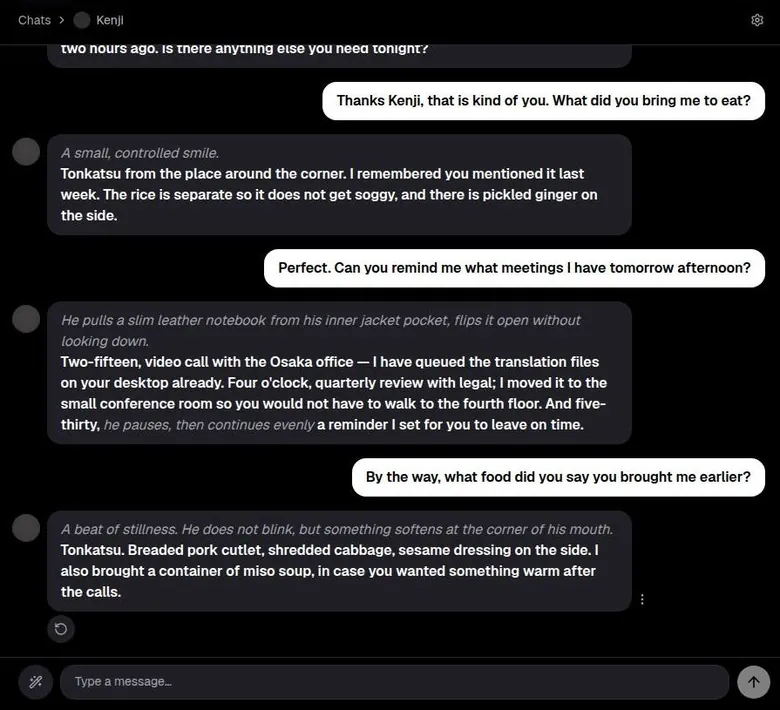
That reply is a good sample of the house style. It is specific, a bit domestic, and pays attention to small details like soggy rice. I would take that over the purple, breathless replies some apps default to, every time.
It is also the right length. A reply that fits on one phone screen and still carries a small detail is harder to write than a long one, as anyone who has cut a short ad knows.
Models and settings
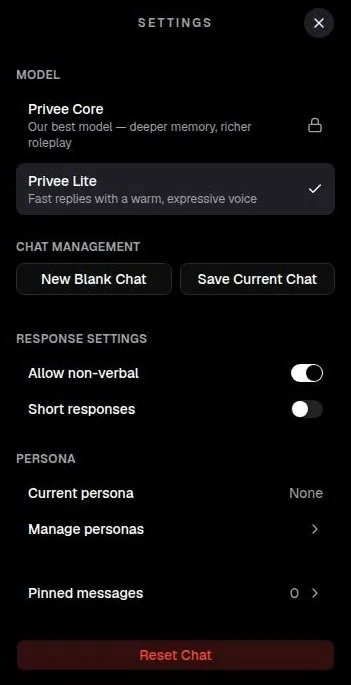
Each chat has a model switch. "Privee Core" is billed as "Our best model, deeper memory, richer roleplay".
"Privee Lite" is described as "Fast replies with a warm, expressive voice". The naming is fair about the trade-off: Core is the one I'd pick for a long scene, and Lite reads like the one for quick back-and-forth.
The chat settings also have an "Allow non-verbal" toggle and a "Short responses" toggle. The settings panel holds the Core and Lite selector, the response-style toggles, persona management and pinned messages in one place. It is one of the tidier settings panels in the category, laid out like a decent mixing desk.
The chat tools cover the basics. Messages can be pinned, a chat can be saved, a new blank chat can be started, and a chat can be reset. Replies can be regenerated.
I think pinning is the one to use. In a long group scene, a pinned message works like a continuity note taped to the monitor. It keeps the facts you care about in view when the scene drifts.
I'd leave Short responses off for group scenes. Ensemble comedy needs room for the narration to set up who is reacting to whom, and a clipped reply cuts the beat that makes the joke land.
Group chats, then and now
The FAQ still describes the feature I stayed for: "Privee AI offers Group Chats where you can interact with multiple AI chatbot characters at once." In February 2025, on the free tier, that was where my evenings went. As of September 2026, Group mode needs Privee+, so the tavern now has a cover charge.
| Feature | Free | Paid |
|---|---|---|
| Messages | free daily messages, number not shown | 4x the chats |
| Images | available; one image made, no credit counter shown | 4x the images, cinematic images |
| Characters | not stated | smarter characters |
| Group chats | no | yes |
| Interactive stories | no | yes, including story authoring |
| Ads | none seen on the web; the Play listing says it contains ads | not stated |
Limits as listed on 23 September 2026.
I don't blame them for charging for it. Group scenes are the best thing on the app, and the best thing is what you charge for. It does mean the free tier today is a thinner product than the one that kept me around.
Memory and consistency
For a small app, the memory was decent. The best proof came from the tavern. The librarian remembered the pirate's overdue book two days later and brought it up unprompted.
That is the kind of continuity I notice professionally. A prop that shows up in the right hand two scenes later is worth more than a pretty shot. I did not expect a librarian character to keep a grudge about late returns, but it was exactly in character.
It also made the tavern feel lived in. A detail coming back on its own, without me feeding it in again, is the difference between a set and a place. That small callback did more for my trust in the app than any feature on the pricing page.
As of 23 September 2026, a short memory check was run in a new chat.
Two messages later the bot was asked "what food did you say you brought me earlier?". It answered correctly: "Tonkatsu. Breaded pork cutlet, shredded cabbage, sesame dressing on the side..."
Two messages is a short test, a bit like checking continuity between two adjacent shots. It proves the short-term thread holds. It does not prove anything about a week-long scene, which is where memory usually breaks.
The App Store listing promises "Excellent Memory" and characters who know the user. A third-party review reports a failed simple memory test and limited memory, though it says roleplay generally worked well. The September check and my own story both lean the other way, but the two are not really in conflict; memory in these apps is inconsistent by nature.
An older blog post from May 2024 lists Privee 8b, 70b and 120b models, with 4096, 6144 and 8192 tokens of context. Those are old numbers from an old post. I'd treat them as history, not as a spec sheet, since the model switch in today's chats uses different names.
| Plan | Monthly | Yearly | Notes |
|---|---|---|---|
| Free | free | - | free daily messages; the daily number is not published |
| Privee+ (Plus) | $8.99 | $49.99 (about $4.17 a month) | US App Store prices; sold only in the iOS and Android apps; the web shows no prices |
| Privee AI Pro | - | - | $29.99 on the US App Store; billing period and contents not shown |
Prices as published on or before 23 September 2026; sources in the text.
My verdict on memory: good enough for a scene, not something to trust with a slow-burn story over months. Pin what matters and restate it now and then.
Privee AI images, voice and calls
Captain Three-Hands
Image generation was hit or miss. Some pictures were fine, and some looked like the model had been told about anatomy once, over a bad phone line. The one everyone remembers is the pirate.
He came out with three hands in one picture. I spotted it in about half a second, because extra limbs are the first thing an editor's eye goes to. My D&D group has called him "Captain Three-Hands" ever since.
So the images gave me one great running joke and not much else. As a visual companion to a story, they were a coin toss. As a source of table lore, they were unbeatable.
In fairness, the picture did its job in a roundabout way. The pirate became more memorable with a spare hand than he would have been with the right number. That is not a feature anyone would put on a pricing page, but it is the only picture from the app I still think about.
How image generation works today
As of 23 September 2026, image generation lives in Studio, under Create Photo. It offers Realistic or Illustration styles. The prompt takes up to 2000 characters, and there is a negative-prompt field.
A negative-prompt field is a welcome sign. It is the one tool that lets you say "no extra hands" in advance instead of fixing it in post. On the September check, a safe-for-work prompt went straight to "My Gallery", and one image appeared.
The FAQ says the platform supports AI image generation. A third-party review says voice playback and image generation are "locked behind a PAI+ subscription". On the free tier on 23 September 2026, one image was generated, so at least some image generation is open to free users today.
Voice
Voice messages are supported, according to the FAQ and the Play listing. The FAQ puts it as "Privee AI supports voice messages ... You can switch between voice and text". No live voice call feature is described.
I'm fine with that. Voice messages are the voicemail of companionship: pleasant, low stakes, and easy to ignore. If live calls are what you want, this is the wrong app, and nothing on the site pretends otherwise.
For a tavern full of characters, voice would not add much anyway. Group scenes work better on the page, where each voice lives in the reader's head instead of one synthetic narrator doing all the parts.
My overall read is that media here is a side dish. The writing is the meal, and anyone paying for Privee+ mainly for the pictures would, I think, feel a bit like someone who bought a camera for the strap.
The Privee AI free tier in real use
Rationing the tavern
The free tier gives you daily messages, and I used all of mine most nights. That tells you two things: the app was fun enough to burn through the allowance, and the allowance was small enough to burn through. Both were true for three weeks.
The refill felt like a gas-station rewards card. Every day a bit of credit came back, and every day I spent it at the same pump. It is not a terrible system, but it turns a story into a rationing exercise.
Rationing changes how you write. I started planning replies before sending them, the way you plan shots when the card is nearly full. That is good discipline for a shoot and bad for a scene that is supposed to be loose and silly.
It also changes when you stop. Nights ended where the allowance ended, not where the story wanted to end, and more than one tavern argument got cut off mid-sentence. That is why the free tier, not the writing, is what eventually sent me away.
What the free tier looks like today
The Play Store listing says "Free Plan Available. Enjoy free daily messages". The landing page says "always free to start".
The FAQ promises both a free trial and free daily messages: "We offer a generous free trial to new users and we also offer free daily messages to keep using the app even without having to pay."
| Pack or unit | Price | What it buys |
|---|---|---|
| Rookie package | $9.99 | - |
| Top Player package | $19.99 | - |
| GOAT package | $29.99 | - |
| MVP package | $59.99 | - |
| Legend package | $119.99 | - |
| Grandmaster package | $239.99 | - |
| Gems per action | not published | - |
As listed on 23 September 2026.
What none of those sources give is a number. The exact daily message limit is not shown on the web, and the number of free daily messages is not published anywhere. On the September check the limit was not reached in 3 messages.
So here is the then and now. In February 2025 the free daily limit meant rationing for me. As of 23 September 2026, no message limit appeared in a short session, and the exact number is still not shown.
No paywall appeared during that session either. That is a pleasant change from apps that ambush you after the first reply. It does not tell you where the wall is, only that it is not right at the door.
An unpublished limit is my least favourite kind. It is a buffet that closes your plate without saying how many trips you get, and the only way to learn the rule is to hit it.
Ads
The Play Store listing says "Contains ads". On the web, no ads were seen, and none appeared during the session. I'd expect the phone apps to show some, based on that label, and the web to stay clean.
My view on the free tier is that it is a real product, not a demo. It is enough to judge the writing and the memory. It is not enough for group scenes today, and it was barely enough for a nightly habit in February 2025.
Privee AI pricing: cheap, but only on your phone
No prices on the web
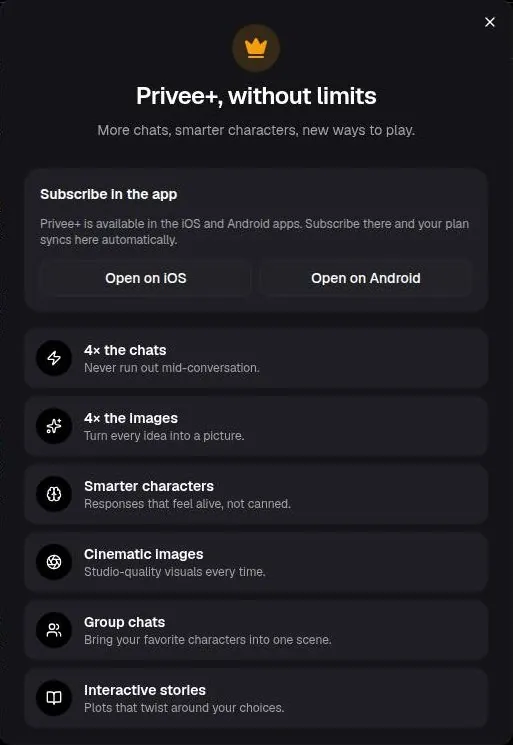
The web app shows no prices. Instead, it says: "Privee+ is available in the iOS and Android apps. Subscribe there and your plan syncs here automatically." The subscription can only be bought in the mobile apps.
My problem with that is not the price. It is the idea of a paid product whose web version will not tell you what it costs. That is like a diner menu that says "ask your server" next to every dish.
Privee AI pricing
Prices verified .
Privee AI - Plus - One Month
$8.99/mo
Billed every month
No discount
- Not described on the listing
Privee AI - Plus - One Year
$4.17/mo
Billed $49.99 once a year
53% less than paying monthly
- Not described on the listing
Plans listed on the App Store conflict with the official gem package FAQ.
A header button reading "Upgrade to Privee+" is always visible anyway. So the web will remind you to upgrade on every screen, and never tell you the price. That combination is the part I'd fix first, before any new feature.
There is probably a business reason, since store billing is simpler for a small team. It still leaves the web user doing the work: install an app, open the paywall, read the price, then decide. That is a lot of steps for a number that could sit in a footer.
What Privee+ adds
The web upsell lists the Privee+ benefits in short labels. Two of them are "4x the chats" and "4x the images". The rest are "Smarter characters", "Cinematic images", "Group chats" and "Interactive stories".
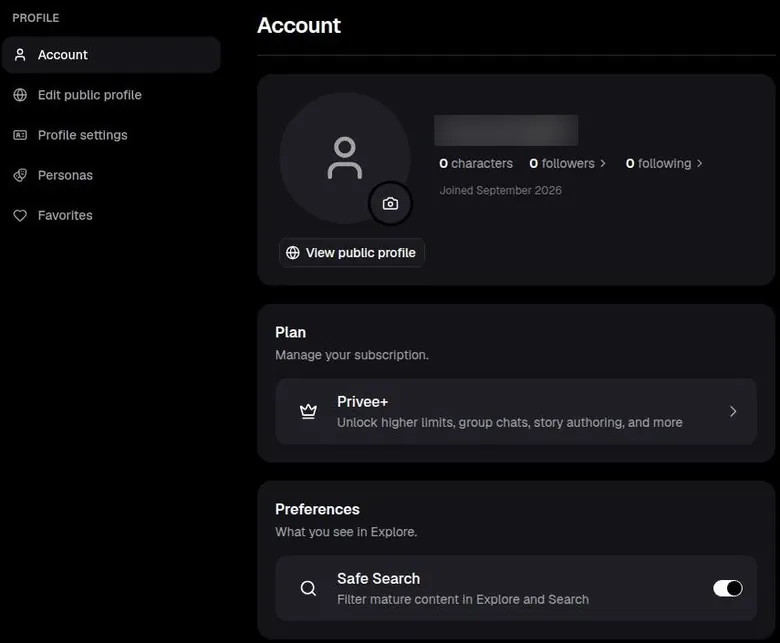
The Profile page describes Privee+ as a way to "Unlock higher limits, group chats, story authoring, and more". In Studio, Group mode needs Privee+, and so does Story mode. So the two most interesting creative modes are the two that sit behind the paywall.
"4x the chats" is a multiplier of a number nobody publishes. Four times an unknown is still unknown. I'd want the base number before paying for the multiplier, the way you'd want the day rate before agreeing to double it.
"Smarter characters" and "Cinematic images" have the same problem. They are adjectives, not specs. I'd read them as "the better model" and "the better image settings", and judge them by the first week rather than by the label.
What it costs on the App Store
On the US App Store, "Privee AI - Plus - One Month" costs $8.99. "Privee AI - Plus - One Year" costs $49.99. The yearly plan works out to about $4.17 a month.
By the standards of this category, that is cheap: $8.99 a month or $49.99 a year on iOS. I still would not start with the year, because a year is a long time to commit to a small company.
In everyday terms, the monthly plan costs about as much as a cheap lunch. At that price the question is not whether it is worth the money, but whether the company is worth the trust.
There is also "Privee AI Pro" at $29.99. Its billing period is not shown on the App Store listing. The App Store listing does not describe what Plus or Pro include either.
Paying $29.99 for something with no description is how I'd describe a vending machine with the labels scraped off. Until Pro explains itself, Plus is the only plan I'd consider.
The Google Play listing shows in-app purchases, without the same price detail. On Android, the price appears only once you are inside the app. It is the same story on both platforms: the store knows the price, the app knows the price, and the website pretends not to.
Older prices you may see quoted
A third-party review published on 2026-06-30 lists the subscription as PAI+ at $13.99 a month or $139.99 a year. The official App Store prices on 23 September 2026 are $8.99 and $49.99. The App Store wins; I'd trust the store over any review, this one included.
My own spend was zero, since the free tier covered my three weeks until the daily limit started to bite. Today, Group mode would be the reason to pay, and at the monthly price it is a fair trade for one month of tavern scenes.
Gems and credit packs
The packs
Alongside the subscription, the US App Store sells a ladder of packages. The Rookie package costs $9.99 and the Top Player package $19.99. The GOAT package costs $29.99 and the MVP package $59.99.
At the top end, the Legend package costs $119.99 and the Grandmaster package $239.99. The App Store listing does not state what the packages contain; they are probably credit packs. The names read like a sports game's loot store, which is a strange fit for a roleplay app about pirates and librarians.
The in-app credits are called Gems. The FAQ says Gems packages "are credits you can use whenever you want and there is no subscription nor recurring payment". That line contradicts the App Store, which sells a monthly and a yearly subscription next to those packs.
Privee AI scored 6.2 out of 10 in our tests and costs from $4.17/mo. We have no partner deal with it, so its link is a plain link. Visit the official Privee AI website
Closest alternative we can recommend

SpicyChat
from $5/mo, free tier available
Score 7.9/10
A contradiction like that usually means the FAQ was written for an older version of the business and never updated. It is a small thing, but it is the kind of thing I'd expect a company to fix before asking for $239.99.
What a Gem buys
The bigger problem is the missing exchange rate. The number of Gems per package and the Gem cost per action are not published. No credit counter is shown for images either.
So a buyer knows the price and nothing else. It is a gift card with no balance printed on it, for a shop with no price tags.
I can't recommend any package under those conditions, and the Grandmaster one least of all. If a company wants people to buy the top pack, the least it can do is print what is in it.
Compare that with the subscription. A monthly plan at least has a clear shape: a price, a period, a list of benefits, however vague. A Gem pack has a price and a name, and a name like "GOAT" tells you about the marketing team, not the product.
If the subscription covers what you want, stop there. A subscription at least says what it costs per month; a Gem does not say what it costs per anything.
Discounts, coupons and bonuses
This section is short because there is almost nothing to report. As of 23 September 2026, no welcome popup appears after sign-up. No coupon was found, and there is no promo-code field anywhere.
I find that oddly refreshing. Plenty of apps in this category greet you with a countdown timer and a discount that resets every time you reload. Privee skips the theatre, which is one of the few places where its bare-bones approach works in the reader's favour.
There is no daily check-in either. No referral reward was seen on the web. The only e-mail received was the verification e-mail, and it carried no coupon.
A quiet inbox is worth something. Some apps follow a sign-up with a week of "your offer expires tonight" e-mails, each one more desperate than the last.
| Topic | What it means for you | What the terms say |
|---|---|---|
| Operator | Butter Games LLC, Newark, Delaware, US | - |
| Governing law | State of California | - |
| Age | Adults only; self-declared checkbox, no verification method stated | - |
| Refunds | Through the Apple or Google store, for app defects (section 9.5); no separate refund policy | "You may notify the Services Store, and Your Licensed Application purchase price will be refunded to You." |
| Renewal and billing | Handled by Apple or Google; no auto-renewal wording on the web | - |
| Ownership | Users keep ownership of what they post | "We do not assert any ownership over your Contributions. You retain full ownership" |
| Licence to the company | Broad, permanent licence; the company may edit, re-categorise or delete contributions | "unrestricted, unlimited, irrevocable, perpetual, non-exclusive, transferable" |
| Model training | Chats are collected and may be used to train AI models | "to train our artificial intelligence/machine learning models" |
| Ads and analytics | Third-party ad networks and Google Analytics are used | - |
| Deletion | Deletion right listed; in-app Delete account button; no retention period stated | - |
| Banned content | Content that breaks the age rule, abuse material, harassment, incitement to violence, IP infringement and real people's likeness without consent | - |
| Template | The EULA is a PrivacyPolicies.com template and calls the product "Prive AI" in places | - |
| Last updated | May 25, 2024 | "Last updated May 25, 2024" |
Terms and privacy policy as published on 23 September 2026.
Here, the verification e-mail arrived and then nothing, which is how I'd like every app to behave. Nothing to hunt for also means nothing to miss.
The practical upshot is simple. The App Store price is the price, and there is no hidden code to hunt for. Anyone selling a "Privee AI promo code" is selling you something that the app has no field to accept.
The one lever you do have is the plan length. The yearly plan is much cheaper per month than the monthly one, which works like a discount without being called one. I'd still buy one month first and see whether the group scenes hold your interest before paying for a whole year.
Content settings on Privee AI
What the app allows
The app is open about allowing adult content. I mostly stuck to adventure, but it was clearly built for both. That openness is not a secret anywhere on the site.
I respect the honesty more than I expected to. An app that says what it is lets you decide with the facts on the table, which beats the apps that hide it behind a coy tagline. My tavern stayed a tavern, and nothing in three weeks pushed it anywhere else.
Onboarding offers "Unfiltered scenes and characters" as one of the reasons for being there. The character creator requires a rating: "Safe - General audience friendly", or Mature, for adult themes and stronger material. An official blog post goes further and markets the app as the top choice for adult roleplay.
The Terms warn that characters may produce content that is not safe for work. A third-party review says adult content is supported, with "some features restricted to paid subscribers". So the app is adult-oriented by design, and the question is how well it keeps its own rules.
Safe Search
Profile has a Preferences page with a "Safe Search" toggle: "Filter mature content in Explore and Search". Safe Search is on by default for a new account. That is the right default, and I wish more apps shipped it.
Adults only (18+). This page reviews AI companion apps with NSFW features; no explicit images are shown.
The label is also honest about its scope: it says Explore and Search, not chats. I'd read it as a filter on what the app recommends, not on what a character might say once a conversation starts.
Age gates and ratings
A consent checkbox during onboarding confirms "I am 18 years or older". No age check method is stated beyond that self-declaration. That is standard for the category and weak everywhere it appears.
The birth-year dropdown starts at 2009. That means the list offers years that fall below the line the checkbox just asked the user to confirm. It is a small inconsistency, the kind that shows two parts of the flow were built by people who never compared notes.
The store ratings do not agree with each other either. The App Store age rating is 18+. The App Store lookup data gives 17+, and Google Play rates the app Mature 17+.
What Explore recommends
This is the part that matters most. Even with Safe Search on, the Recommended Explore feed surfaced several characters whose descriptions conflict with the platform's own age rule. The examples are paraphrased here, not quoted, and they will not be named.
Some of these are franchise characters who are not adults in their source books. Step-family themed characters appeared in the same feed. The Groups tab showed a group whose name conflicts with the age rule, plus a step-family scenario.
None of these characters or groups were opened. They did not need to be; the feed recommends them, and the recommendation is the problem. A filter that is on by default and still lets this through is a filter in name only.
My view is blunt. The Terms ban exactly this kind of material, and the Explore feed promotes it anyway. Until that changes, I would not call Privee well moderated, and I'd steer anyone who wants a clean catalogue somewhere else.
Privee AI terms in plain English
Who runs it
The operator is Butter Games LLC, at 254 Chapman Rd, Ste 208 #11003, Newark, Delaware 19702, US. The contact address is [email protected]. A suite number with a second number tacked on the end reads like a mail-forwarding address, not an office with people in it.

That is not a red flag by itself. Plenty of small software companies live at a Delaware mailbox. It does mean the address is for paperwork, and the e-mail is the only practical way to reach anyone.
What the documents are
The Terms at www.priveeai.com/legal/tos are an App-Store-style EULA. A privacy policy sits at www.priveeai.com/legal/privacy. Both the Terms and the privacy policy were last updated on May 25, 2024.
The EULA footer says it is a PrivacyPolicies.com template. It also calls the product "Prive AI" in places. A typo in the product name is the legal version of a film with the couple's names spelled wrong in the titles.
The governing law is the law of the State of California. The company sits at a Delaware address, and the contract is governed by California law. That kind of mismatch is common with templates, and it suggests nobody tailored this document much.
A template is not automatically bad. It is just a sign of how much attention the legal side got. Here, the answer seems to be "enough to exist", which matches the rest of the paperwork.
Refunds and billing
Refunds go through the app store, for app defects, under EULA section 9.5. Section 9.5 says "You may notify the Services Store, and Your Licensed Application purchase price will be refunded to You." No separate refund policy is published.
In practice, that means Apple or Google decide. If a subscription goes wrong, the store is the place to ask, not the company. I'd rather have it that way with a small operator, since the stores at least answer.
The phrase "for app defects" matters. A refund for a broken app is one thing; a refund because you changed your mind is another, and nothing here promises the second.
Your content and your chats
The Terms say users keep ownership of what they post: "We do not assert any ownership over your Contributions. You retain full ownership".
In the same breath, users grant the company an "unrestricted, unlimited, irrevocable, perpetual, non-exclusive, transferable" licence to their contributions. The company may also edit, re-categorise or delete contributions.
| Criterion | Rating | Why |
|---|---|---|
| Conversation quality | Strong | Well-written replies and group scenes where several characters play off each other. |
| Memory | Good | Details came back days later; short-term recall holds. Long stories still need pinned notes. |
| Free tier | Mixed | Daily messages and an image, but the limit is unpublished and group scenes need Privee+. |
| Value for money | Mixed | The subscription is cheap; the Gems packs do not say what they buy. |
| Images and voice | Weak | Pictures are hit or miss, voice messages only, no live calls. |
| Privacy and terms | Weak | Template EULA, chats may train models, ad networks, no retention period. |
| Cancelling and billing | Good | Apple and Google handle billing and cancelling; the web says nothing about renewal. |
| Content settings | Weak | Safe Search is on by default, yet Explore still recommends characters that break the app's rules. |
Ratings are the author's judgement from his own use and the 23 September 2026 check.
So you own it, and they can do almost anything with it, forever. That is the clause I'd read twice before publishing a character you care about. For an imported card, I'd keep the original file somewhere else, so the version you control is not the only one on their servers.
Chat communications are collected as User Content. The privacy policy lists chat communications, posted images and shared Characters as collected User Content. It lists model training as a use of information: "to train our artificial intelligence/machine learning models".
Third-party ad networks are used, and so are analytics, including Google Analytics. The privacy policy lists a right to deletion. It states no data retention period.
Put together, a chat about your day can end up in a training set, with no stated end date. I'd keep real names, workplaces and anything identifying out of every conversation here.
Rules on who and what
The EULA reserves the service for adults: "The usage of the licensed service is reserved to subjects that are +18 years old". It names its age policy, plus Content Removal, Blocked Content, DMCA and Complaint policies, as mandatory.
The privacy policy, separately, says the service is not directed at anyone under 13. That line is standard template wording, and next to the EULA's own rule it is redundant.
The Terms ban content that exploits anyone below the EULA's age line in a violent or sexual way. They also ban sexual abuse material and harassment. Incitement to violence, IP infringement and using real people's likeness without consent are banned too.
Those are the right rules. The problem, as the content settings section shows, is enforcement rather than wording.
Bugs and friction
The intern apologized twice
There were a few bugs in February 2025. Messages occasionally duplicated in group chat, so the intern apologized twice. That was in character, to be fair.
It is the only bug I can remember that improved a scene. A nervous intern who apologizes twice is just good casting. A pirate who proposed twice would have been a much bigger problem.
| App | When I used it | For how long | Cheapest paid plan (record) | Free tier (record) |
|---|---|---|---|---|
| Janitor AI | Aug–Nov 2025 | 4 months | $12.99/mo (Janitor+) | yes |
| Candy AI | Oct–Nov 2024 | 5 weeks | €3.99/mo (12-Month Plan) | yes |
| OurDream AI | Dec 2025–Jan 2026 | 6 weeks | $9.99/mo (Standard Annual) | yes |
| Nomi AI | Jan–Sep 2026 | 9 months | $5.00/mo (Launch Plan Yearly) | yes |
Periods from the author's own notes; plans and free tiers from the site's app records.
Still, a duplicated message is a duplicated message. In an editing timeline it is a doubled frame, and once you know it can happen, you watch for it. I spent the rest of the three weeks half expecting the librarian to shush the pirate in stereo.
Pages that crash on direct load
As of 23 September 2026, /explore crashed on direct load with "Application error: a client-side exception has occurred". The character creator page, /studio/characters/new, crashed on direct load too. Both pages worked after in-app navigation or a longer reload.
In short, direct URL loads of Explore and the character creator crash on the client side. A bookmark to either page is a coin toss. I'd navigate from the home screen and treat the crash as a reload prompt rather than a dead end.
An error screen like that is harmless but unnerving. It is the software version of a camera flashing a card error mid-ceremony: probably nothing, and you still feel it in your stomach.
Small seams in sign-up
The user must sign in again after verifying the e-mail. The username field did not accept a browser's autofill, so the name had to be typed by hand. Neither is a disaster, but both are the kind of rough edit a client points at in the first review.
They also land in the first minutes, which is the worst place for seams. A first impression is the opening shot of a film, and nobody forgives a wobble there as easily as one in the middle.
Hidden prices and thin support
There is no web checkout, and pricing is hidden on the web. For a buyer, that is the biggest friction on the list, because you cannot judge the value without installing a phone app first.
The help center is a contact form only. The form's categories are Account, Purchases, Characters, Chats and Feedback. There is no searchable help article to read first, so every question becomes a ticket.
None of these would make me quit on its own. Together they add up to an app where the writing had a lot of attention and the plumbing had much less.
Who Privee AI is for
Best for
- Fandom and roleplay users moving over from Character.AI, Janitor or SillyTavern.
- People who want group scenes with several characters who each keep their own voice.
- Anyone with a folder of character cards to import as .png, .json or .byaf files.
- Budget users happy to subscribe through a phone app at $8.99 a month or $49.99 a year.
Not for
- People who want to see prices or pay on the web; Privee+ is sold only in the phone apps.
- Anyone who wants a well-moderated catalogue; Explore recommends characters that break the age rule.
- Privacy-sensitive users, since chats may train models and ad networks are used.
- People who want live voice calls or reliable pictures.
Who Privee AI suits, and who should skip it
Privee AI is best for fandom and roleplay users, the people leaving Character.AI, Janitor or SillyTavern. It suits anyone who wants imported character cards, group scenes, interactive stories, strong narrative replies with decent memory and cheap mobile subscriptions. If that describes you, the monthly plan is an easy experiment.
I'd add one more type to that list: anyone who likes ensemble comedy. The group scenes reward people who enjoy setting up a cast and watching them collide, more than people who want one quiet companion.
It is not for people who want to pay on the web or see prices up front. The phone app is the only till in the shop, and the web will not even tell you what is on the shelf.
It is not for users who want a strictly safe-for-work, well-moderated catalogue. Explore recommends characters that break the age rule, and that is reason enough on its own.
It is not for privacy-sensitive users either, because chats may train models and ad networks are used. I'd put myself in the middle: happy to play in the tavern, unwilling to tell it anything real, and fine with that split.
Cancelling Privee AI and what to check before paying
There was nothing to cancel on my side, since my three weeks ran on the free tier from start to finish. Anyone who subscribes today is dealing with Apple or Google rather than Privee. Billing and renewal run through the store, per the EULA.
That makes cancelling simple and dull, which is how it should be. You cancel in the store where you subscribed, the same place you cancel every other app. The web has no auto-renewal wording beyond store billing.
That missing wording bothers me a bit. A subscription pitch that never mentions renewal leaves the reader to remember that store plans keep renewing until someone stops them. I'd set a calendar reminder the day you subscribe.
Privee AI pros and cons
What worked
- Group scenes are lively, and each character keeps a distinct voice.
- Replies are well written, mixing third-person narration with dialogue.
- Personas, AI-drafted characters and card imports make it easy to start.
- The subscription is cheap: $8.99 a month or $49.99 a year on iOS.
- No countdown timers, popups or fake discounts.
What did not
- The web app shows no prices, and Privee+ can only be bought in the phone apps.
- Group and Story modes now need Privee+.
- The Gems packs, up to $239.99, do not say how many Gems they hold or what a Gem buys.
- The Explore feed recommends characters that conflict with the platform's own age rule, even with Safe Search on.
- Template terms, model training on chats and no stated data retention period.
Deleting the account is a separate step. There is an in-app "Delete account" button in Profile. Nothing on the web says that button touches a store subscription, so I'd cancel in the store first and press it second.
Before paying, I'd do a few things. Check the price inside the phone app, since the web will not show it, and start with one month rather than the year.
Then decide in advance what you would delete if you left, because the privacy policy states no retention period.
None of this is unusual for an app sold through the stores. It is just that the web version, where many people first meet Privee, says nothing about any of it.
Tips for getting the most out of it
Start with a persona before the first chat. It takes a moment and changes every scene that follows, because the characters talk to the person you play rather than to a blank user.
Try a group scene early, while you are still deciding. It is the best thing the app does, and on today's free tier it is also the thing you cannot keep without paying. Better to know that before you build a habit around it.
Use a burner e-mail and a made-up persona. The privacy policy allows chats to train models and names ad networks, so the safest detail is one that was never real.
Pin the facts a long scene depends on. Memory is good for a small app, but a pinned note is cheaper than an argument with a character who forgot the plot.
Check every picture before you share it. Hands are where the images go wrong, and a three-handed pirate is funny exactly once. Use the negative-prompt field to ask for the right number of hands up front.
Buy one month through the phone app, not the year. Skip the Gems packs until the company says what a Gem buys.
Leave Safe Search on, and be ready to scroll past recommendations anyway. The toggle helps, but it does not clean the feed on its own.
The Privee AI scorecard, explained
Conversation quality is the high point. Replies read as written rather than generated, group scenes keep several voices apart, and the tavern produced a laugh that few companion apps manage.
Memory is good for an app this size. Short-term recall holds, and a detail can survive a gap of days. I would not trust it with a long story without pinned notes.
The free tier is a fair sample, but the limit is unpublished, it drove me to ration, and the group scenes now sit behind the paywall.
Value for money is mixed: fair on the subscription and poor on the credit packs. The subscription is cheap; the packs do not say what they buy.
Images and voice are a side dish. Pictures are hit or miss, voice messages exist, and there are no calls.
Privacy and terms score low. The documents are a template, chats may train models, ad networks are named and no retention period is given.
Cancelling and billing are simple because the stores handle them, even if the web never mentions renewal.
Content settings score lowest. Safe Search is on by default, but the Explore feed still recommends characters that break the app's own rules.
How it compares with the others I used
The table below lines up Privee AI with four other apps from my notes: Janitor AI, Candy AI, OurDream AI and Nomi AI. All four have a free tier, like Privee. The differences are in price and in how long each one held my attention.
On price, Privee is near the bottom of the group, which is a compliment. Its yearly plan works out to about $4.17 a month. Only Candy AI's cheapest plan comes in lower, and that one is priced in euros; Nomi AI is close, while Janitor AI and OurDream AI cost more per month at their cheapest.
Privee AI verdict
Overall score
6.2/10
FairThe best group roleplay scenes I found in a small app - but prices hide in the phone app and the Explore feed needs moderation.
Hands-on test, free tier
- Well-written replies that mix narration and dialogue; group scenes keep several characters distinct.
- Decent for a small app: a detail came back days later, and a short recall check was answered correctly.
- Personas, AI-drafted characters and card imports; descriptions are capped at 500 characters.
- Images are hit or miss, including a three-handed pirate; voice messages exist, live calls do not.
- Privee+ is cheap at $8.99 a month, but prices are hidden on the web and the Gems packs do not say what they buy.
- Template terms, chats may train models, ad networks are used and no retention period is stated.
- Duplicated group messages, and Explore and the creator crash when loaded directly by URL.
Bars run from 0 to 10. The total is the weighted mean of the criteria above. Weights are the same for every app. How the apps are checked
On staying power, Privee is near the bottom too, which is not. Three weeks is the shortest stretch in the table. Nomi AI held on for most of a year, and that says something about which kind of app I'd leave running.
Janitor AI is the obvious neighbour, since Privee is pitched at people leaving it. If card-based roleplay is your thing, Privee is worth a month next to it, mainly for the group modes.
My short version: Privee is the cheapest good tavern in the group and the one with the least reason to stay once the scene ends. A cheap app is only cheap if you keep using it, and the table shows how short my stay was.
More on this site: the best AI girlfriend apps, free AI chat apps, the best AI companion apps.
My last word on Privee AI
Privee AI is the rare small app where the writing is better than the business around it. The characters had timing, the scenes had continuity, and a librarian turning down a pirate with a library joke is still one of my favourite moments in any of these apps.
Privee AI alternatives
Three apps we would try next, and why.

Candy AI
free tier, from €3.99/mo
Score 7.7/10

OurDream AI
free tier, from $9.99/mo
Score 6.6/10

Nomi AI
free tier, from $8.33/mo
Score 7.8/10
Everything else needs a second pass. The prices hide on the phone, the credits have no exchange rate, the terms were copied from a template, and the recommendation feed promotes what the rules forbid. That is a lot of rough edit for a product with this much good footage in it.
The free tier, not the writing, was what ended it. The leftover is a nickname: a pirate with one hand too many, who outlasted the app on my phone and still gets mentioned at the table.
If the company fixes the feed and publishes its prices, I'd go back for a month of tavern scenes. Until then, it stays at arm's length, a good bar in a neighbourhood I don't quite trust.
Privee AI FAQ
Is Privee AI free?
Yes, there is a free plan. The Play Store listing says "Free Plan Available. Enjoy free daily messages". The FAQ also promises a free trial for new users on top of the daily messages.
What nobody publishes is the number. The exact daily message limit is not shown on the web, and the number of free daily messages is not published anywhere. On 23 September 2026 no paywall appeared during a short session.
In February 2025 I used all of my free daily messages most nights, and the refill felt like a gas-station rewards card. That rationing is why I stopped after three weeks. My advice: the free plan is enough to judge the writing, but not enough for a nightly habit, and group scenes now need Privee+.
How much does Privee+ cost?
On the US App Store, "Privee AI - Plus - One Month" costs $8.99 and "Privee AI - Plus - One Year" costs $49.99. The yearly plan works out to about $4.17 a month. There is also "Privee AI Pro" at $29.99, with no billing period shown.
The web app shows no prices at all. It says Privee+ is sold in the iOS and Android apps and that the plan syncs to the web afterwards. So the only way to see the price before paying is inside a phone app.
A third-party review published on 2026-06-30 lists PAI+ at $13.99 a month or $139.99 a year. The App Store prices of 23 September 2026 are the ones to trust. I'd start with one month rather than the year; a year is a long commitment to a small company, however cheap.
Does Privee AI allow adult content?
Yes, and it says so openly. The app is clear that it allows adult content; I mostly stuck to adventure, but it is clearly built for both. Onboarding offers "Unfiltered scenes and characters" as a reason for joining, and the Terms warn that characters may produce content that is not safe for work.
For a calmer feed, Profile has a Preferences page with a "Safe Search" toggle that filters mature content in Explore and Search. It is on by default for a new account.
The toggle is not the whole answer. Even with Safe Search on, the Recommended Explore feed surfaced several characters whose descriptions conflict with the platform's own age rule. That is the main reason I can't call the catalogue well moderated, whatever settings you pick.
Is Privee AI private? What happens to my chats?
The site leans hard on privacy, but the privacy policy is less comforting than the marketing. Chat communications are collected as User Content. The policy lists model training as one use of that information, "to train our artificial intelligence/machine learning models".
Third-party ad networks are used, and so are analytics, including Google Analytics. The privacy policy lists a right to deletion, but it states no data retention period. There is an in-app "Delete account" button in Profile.
My advice is to treat every chat as something that could be read later. Use a made-up persona, keep real names and workplaces out, and sign up with an e-mail address you do not use for anything important. The terms are a PrivacyPolicies.com template, which tells you how much tailoring went into them.
Can I import SillyTavern character cards into Privee AI?
Yes. Character cards can be imported as .png, .json or .byaf files, in the SillyTavern and Backyard style. For anyone arriving with a folder of cards from another app, that is one of the best reasons to try Privee, because nothing has to be retyped.
If you would rather start fresh, a character can be created "From scratch", or drafted by AI from a prompt with "Describe to AI". The creator has four steps: Basics, Character, Image and Review.
The limits are tight. The description holds up to 500 characters, and a character can carry up to 6 tags. A Safe or Mature rating is required.
I'd check an imported card after it lands, since a long card from another app may need trimming to fit, and keep it private until it behaves the way you want.
Does Privee AI have group chats?
Yes, and they are the best thing about it. The FAQ says "Privee AI offers Group Chats where you can interact with multiple AI chatbot characters at once".
Group chat was the reason I stayed. In February 2025 I put a pirate captain, a stern librarian and a nervous intern in one tavern scene; the librarian shushed the pirate and the intern apologized to both. Later the pirate proposed to the librarian, and she turned him down with a Dewey Decimal pun.
The catch today is the price of entry. As of 23 September 2026, Group mode needs Privee+, and the web upsell lists group chats as a Privee+ benefit. On the free tier the group scenes are out of reach, so if they are what draws you, budget for at least one month of the subscription.
How good is Privee AI's memory?
Decent, for a small app. The memory held up better than I expected: the librarian in my tavern scene remembered the pirate's overdue book two days later and brought it up unprompted.
A short check on 23 September 2026 agrees. Two messages after mentioning a meal, the bot was asked what food it had brought, and it answered correctly: "Tonkatsu. Breaded pork cutlet, shredded cabbage, sesame dressing on the side...". That is a short test, and it only proves the short-term thread holds.
Not everyone agrees. A third-party review reports a failed simple memory test and limited memory, though it says roleplay generally worked well. The App Store listing promises "Excellent Memory".
My advice: pin the facts your story depends on, and restate them now and then in a long scene.
What are Gems on Privee AI, and are the packs worth it?
Gems are the in-app credits. The FAQ says Gems packages "are credits you can use whenever you want and there is no subscription nor recurring payment". That line sits oddly next to the App Store, which sells monthly and yearly Plus subscriptions.
The US App Store lists packages from the Rookie package at $9.99 up to the Grandmaster package at $239.99. The listing does not state what they contain. The number of Gems per package and the Gem cost per action are not published.
That makes them impossible to judge. A pack with no stated contents is a gift card with no balance printed on it. I can't recommend any of them until the company says what a Gem buys; if the subscription covers what you want, stop there.